
Benefits of Professional Residential Garage Door Installation in Worthington, OH
Published by A1 Garage Repair LLC
A new garage door only works as well as it is installed. The measuring, spring sizing, track alignment, balancing, sealing and safety testing done on install day decide how the door runs for years afterward.
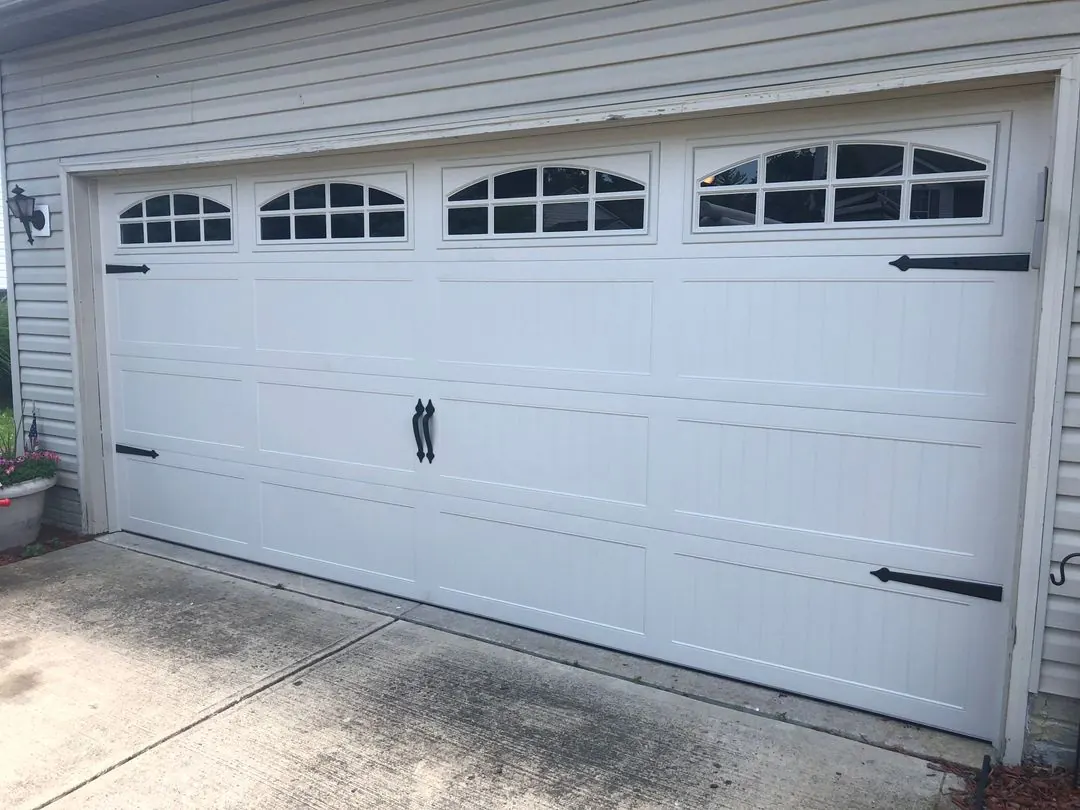
Measuring the opening before the door is ordered
A garage door is built to order for a specific opening, so the job starts with a tape measure. The installer records the width and height of the opening, then the three clearances that homeowners rarely think about: headroom above the opening, side room next to it, and the depth of the garage back to where the opener will sit.
Those measurements decide which track and spring setup will fit. A garage with a low ceiling may need low-headroom track, and a garage with a tall ceiling can use high-lift track that carries the door up closer to the ceiling. Getting this wrong means a door that arrives and does not fit, or one that fits only after shortcuts that wear parts out early.
The installer also looks at the framing around the opening. The jambs and header have to be solid and flat, because the tracks and the spring assembly are anchored to them.
Matching the springs to the weight of the door
The springs do the lifting, not the opener. A torsion spring sits on a shaft above the door and is wound so that it counteracts the door’s weight. Extension springs do the same job by stretching along the horizontal tracks.
Spring size is calculated from the door’s actual weight, its height and the cable drums it uses. Insulation, windows and a thicker steel skin all add weight, so two doors of the same size can need different springs. A spring that is too weak leaves the door heavy and overworks the opener. One that is too strong makes the door drift upward and hard to close.
Springs and lift cables are under high tension. Winding or adjusting them is not a homeowner task, and it is the main reason a door install should not be a weekend project.
Setting the tracks plumb, level and evenly spaced
The rollers ride in the tracks every time the door moves, so small track errors turn into noise, binding and worn rollers. The vertical tracks have to be plumb and set at an even distance from the door. The horizontal tracks have to be level with each other and well supported from the ceiling.
A professional installer checks the spacing along the full travel, not only at the floor. If the tracks pinch the door at one point, the door rubs and the opener strains. If they are too loose, the door rattles and can work its way out of line. The curved section where vertical and horizontal track meet gets particular attention, because that is where a door most often catches.
Balancing the door before the opener is connected
Once the door is hung and the springs are wound, the installer tests the balance by hand with the opener disconnected. A balanced door lifts with modest effort and holds its position when you stop it about halfway up. If it drops or climbs on its own, the spring tension is adjusted until it holds.
Balance matters because every other part depends on it. An opener is designed to guide a balanced door, not to haul dead weight. A door that is out of balance wears out opener gears, cables and rollers faster, and it makes the safety reversal less dependable.
Sealing the door against weather and pests
A door can be well insulated and still leak air if the seals are skipped or rushed. The installer fits a flexible seal along the bottom edge, and weatherstripping along the sides and top of the opening so the door closes against it.
The bottom seal has to meet the floor along its whole length. Garage floors are seldom perfectly level, so the installer checks for gaps at the corners and adjusts the door or the seal to close them. Good sealing keeps out drafts, rain, leaves and mice, and it lets the insulation do its job.
Safety testing and the walkthrough at the end
The last step is testing. Photo-eye sensors are mounted near the floor on each side of the opening and aimed at each other, then checked by blocking the beam while the door closes. The opener’s travel limits and closing force are set, and the auto-reverse is confirmed by letting the door come down on an object laid on the floor.
Before the installer leaves, you should be shown:
A1 Garage Repair LLC installs residential doors in Worthington with its own trained employees, not subcontractors. New doors come with a limited lifetime warranty, and estimates on new doors and openers are free. Call (614) 500-4377 to set up a visit.
- How to pull the manual release and move the door by hand during a power outage
- How to test the photo eyes and auto-reverse yourself each month
- Which parts need occasional lubrication and which should be left alone
- What the warranty covers on the door and on the parts
When you compare installation quotes, ask how the installer handles measuring, spring sizing, balance and safety testing, because those steps decide how well the door works.
Related service: Residential Garage Door Installation